- Salisbury's Take
- Posts
- Scientists Use Cell-Free DNA to Get Early Glimpse of Liver Disease
Scientists Use Cell-Free DNA to Get Early Glimpse of Liver Disease
Plus: An important opportunity to share your feedback about scientific research priorities with the NIH

Meredith Salisbury
March 06, 2026
A quick heads-up before we dive into today’s news: the National Institutes of Health, the single largest public provider of funding for scientific research in the U.S., is offering all of us a chance to put in our two cents about how it should operate and what it should prioritize in the coming years. If you haven’t been happy about recent changes to NIH funding (and specifically how it decides what to fund), this is a great opportunity to sound off. You have to register in advance, but aside from that there’s no cost to participate in one of these virtual sessions with NIH leadership.
Sign up using the link for the session that works for you:
With that housekeeping done, let’s talk about cell-free DNA, shall we?
If you’re not familiar with it, here’s the skinny. Most of our DNA is packed neatly inside our cells, where it serves as our biological blueprint. But when cells get damaged or die, they can split open and shed their molecular contents. Some of this DNA winds up in our bloodstream, where it can be accessed for clinical testing with a simple blood draw.
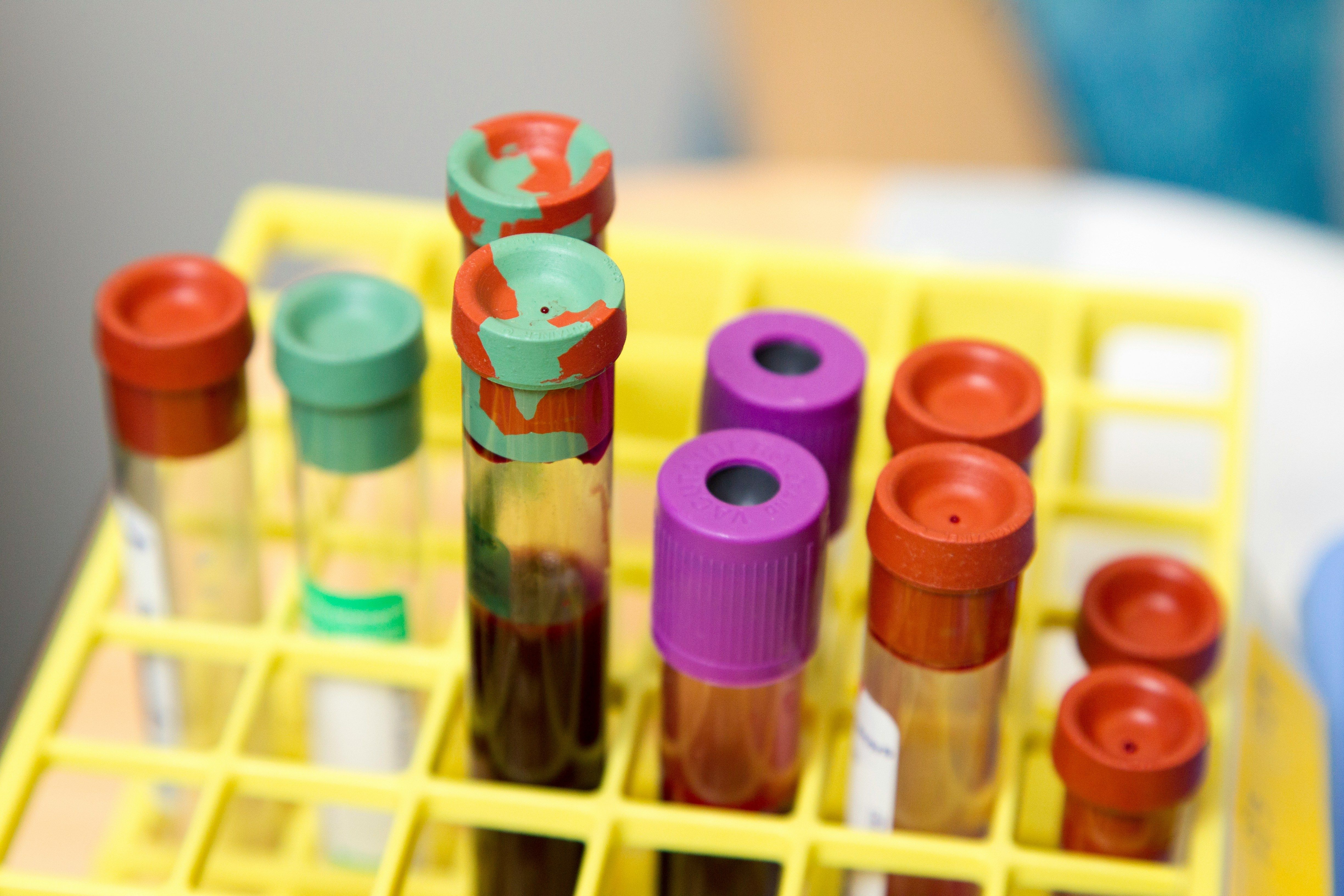
Photo courtesy of the National Cancer Institute
As you might imagine, scientists are really excited about what these little bits and bobs of free-floating DNA can tell us about our health. Cell-free DNA got its start in the clinic as an alternative to amniocentesis; a blood test on the mom could pick up enough fetal DNA for detailed analysis of the developing baby. Now known as noninvasive prenatal testing, the approach not only delivers the kind of information about major chromosomal abnormalities that the riskier amnio procedure gave but also sheds light on other aspects of fetal health as well as the baby’s sex.
Analyzing cell-free DNA has also been a game-changer in oncology. Tumors shed DNA, making it possible to scoop up some of that genetic material and get a closer look at how any particular tumor is evolving, which treatments it might (or might not) respond to, and whether it’s developing any resistance to therapy for patients undergoing treatment. Cell-free DNA analysis can even be used to detect cancer in people long before it triggers recognizable symptoms, enabling earlier diagnosis and a better chance at survival.
And here’s another great application: doctors are using cell-free DNA to monitor transplant patients, looking for early indicators of organ rejection. When high levels of cell-free DNA come from the donor organ, that’s a sign that the transplanted kidney or heart or lung may be under attack by the body’s immune system.
All of that leads us to a story that caught my eye this week: scientists have now found a way to use cell-free DNA analysis to spot a variety of liver diseases. Through the magic of what they call a liquid biopsy (and the rest of us call a blood test), they analyzed biomarkers associated with liver disease in samples from more than 1,500 people. A machine learning algorithm was able to distinguish early disease from more advanced disease, which in potential clinical use would be helpful for giving patients not just a diagnosis but also a more precise prognosis. The scientists also checked to make sure that the algorithm wouldn’t mistake other diseases for liver disease.
This was a research study, so it’s nowhere near clinical use yet. But it’s great progress in the continued effort to glean as much insight as possible from easily accessible cell-free DNA, minimizing the need for more invasive tests and procedures.